Your Shopify store is live, the theme looks good, and traffic is coming in. But revenue still feels uneven. Some visitors browse and leave. Some add to cart and disappear. Some buy once and never come back. That's usually the point where merchants open the Shopify App Store, search for shopify marketing tools, and get buried in overlapping promises.
The hard part isn't finding tools. It's deciding whether you need one platform or a stack, and making sure each app feeds the next step in the funnel. A popup tool that collects emails but doesn't pass clean data into your email platform creates work, not efficiency. An advanced automation platform without enough lead capture at the top leaves expensive capacity sitting idle.
Shopify's scale is one reason this matters so much. Independent 2026 roundups report that Shopify has generated over $1.6 trillion in cumulative sales across more than 19 years, reached $11.5 billion in revenue in 2025, and powers about 28% of hosted ecommerce sites in the US, ahead of WooCommerce at 23%, according to EcommerceTrix's Shopify statistics roundup. That kind of market depth is why the best tools for Shopify aren't just store add-ons. They're systems for capture, nurture, retention, and optimization.
If you also need better creative for paid campaigns, ShortGenius AI ad generator is worth a look.
Table of Contents
- 1. SmashPops
- 2. Privy
- 3. Klaviyo
- 4. Omnisend
- 5. Postscript
- 6. Attentive
- 7. Yotpo
- 8. Nosto
- 9. OptiMonk
- 10. Justuno
- Top 10 Shopify Marketing Tools Comparison
- Your Next Move Start with Your Biggest Bottleneck
1. SmashPops
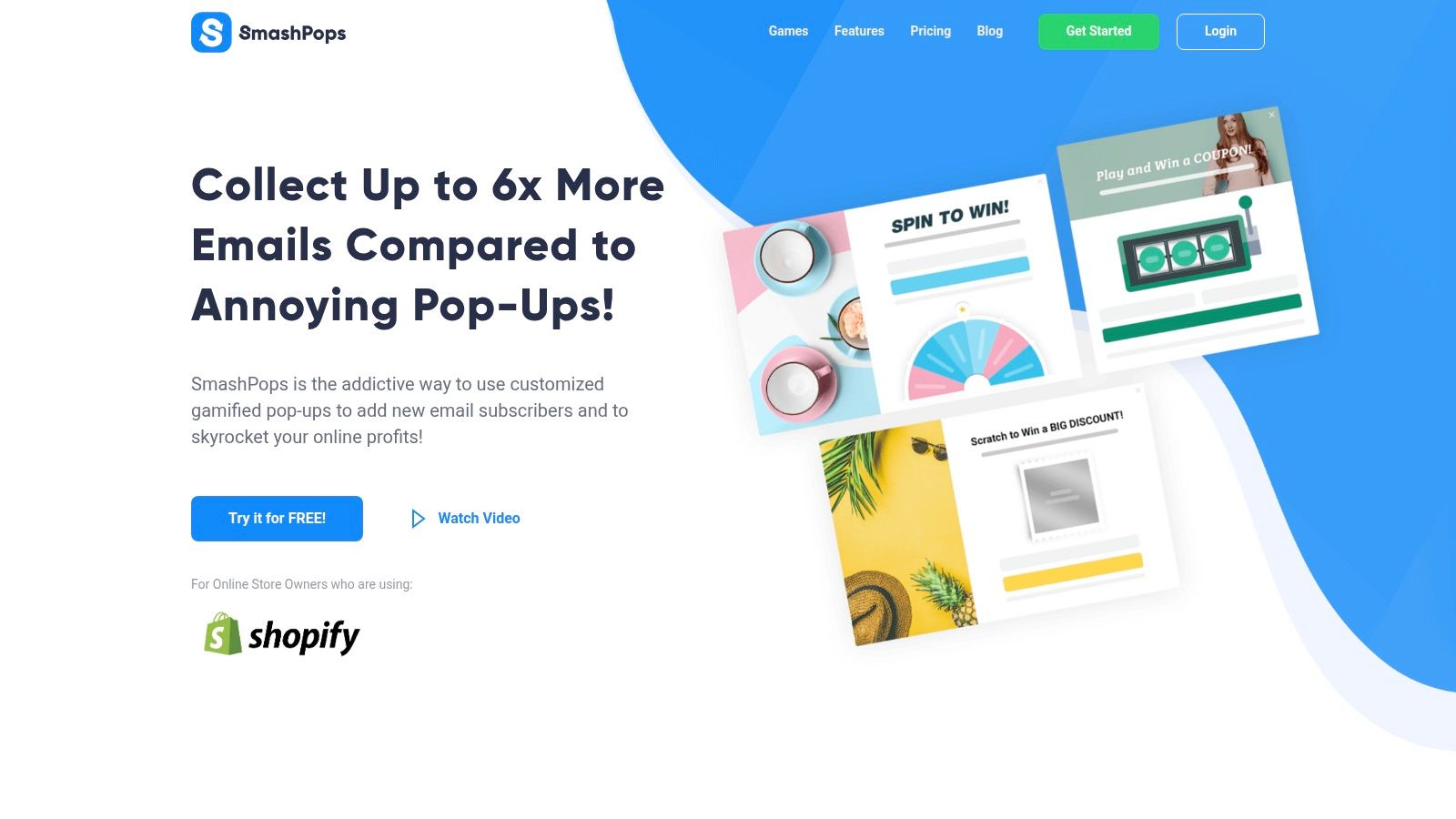
A common Shopify problem looks like this. Paid traffic is coming in, product pages are getting views, and the popup still converts like wallpaper because shoppers have seen the same “get 10% off” form a hundred times before. SmashPops is built for that specific bottleneck: capture.
Instead of asking for an email upfront with a static form, it turns the opt-in into a short interactive moment. Formats include Spin the Wheel, Slot Machine, Scratch Card, Pick a Gift, Claw Machine, and Card Dance, followed by a one-time coupon. That changes the sequence in a useful way. The visitor engages first, then shares contact information.
That distinction matters if you are building a stack by function. SmashPops is not trying to be your email platform, SMS platform, review engine, and personalization layer in one app. It is a specialized top-of-funnel capture tool, and that focus is exactly why it can work well at the front of a broader Shopify marketing system.
Why SmashPops stands out
SmashPops is strongest when the main job is growing your list from existing traffic without redesigning the whole site experience. It includes targeting controls such as exit intent, scroll depth, device type, visit count, referrer, and country. It also covers operational details that often get ignored until the list quality slips, including junk-email detection, CSV export, and single-use coupon generation.
The practical value is simple. Better capture only helps if the data flows into the rest of your stack cleanly. SmashPops integrates with tools such as Klaviyo, MailChimp, AWeber, and Zapier, and teams that need a clean handoff can follow this guide on sending collected popup data to your email provider.
The company highlights stronger email collection and direct sales lift compared with traditional popups. Treat that as a test hypothesis, not a guarantee. Results depend on traffic quality, offer strength, timing rules, and how well the popup connects to your follow-up flows.
A useful way to frame it is this: SmashPops improves the first conversion step. Klaviyo or Omnisend handles nurture. Postscript or Attentive can pick up SMS. Yotpo supports retention through reviews and loyalty. SmashPops earns its place if your current stack already has follow-up capacity, but the top of the funnel is underperforming.
Practical rule: Use gamified popups to increase qualified opt-ins, then let your email and SMS tools do the heavier retention work.
For stores focused on abandoning-visitor recovery, SmashPops' take on exit intent technology for Shopify stores adds helpful context on where these triggers tend to work best.
Best fit and trade-offs
SmashPops fits stores with meaningful traffic volume and a weak capture rate, especially brands where discounting is already part of the acquisition model. It also tends to make more sense on mobile-heavy stores, where static popups often feel easy to dismiss and hard to differentiate.
The trade-offs are real.
- Best use case: Brands that need more email or SMS subscribers from current traffic, not brands looking for an all-in-one lifecycle platform.
- Main strength: Interactive popups make the offer feel participatory, which can improve opt-in rates when standard forms have gone stale.
- Main limitation: It is a specialist tool, so you still need a separate system for email automation, SMS, and retention programs.
- Operational caution: Trigger timing matters. Launch it too early, show it too often, or run it on low-intent pages, and the gain in opt-ins can come at the cost of site experience.
I would use SmashPops when the diagnosis is clear: traffic is there, the offer is acceptable, but the capture mechanism is weak. In that setup, it adds something meaningfully different to the stack instead of duplicating what your ESP already does.
2. Privy
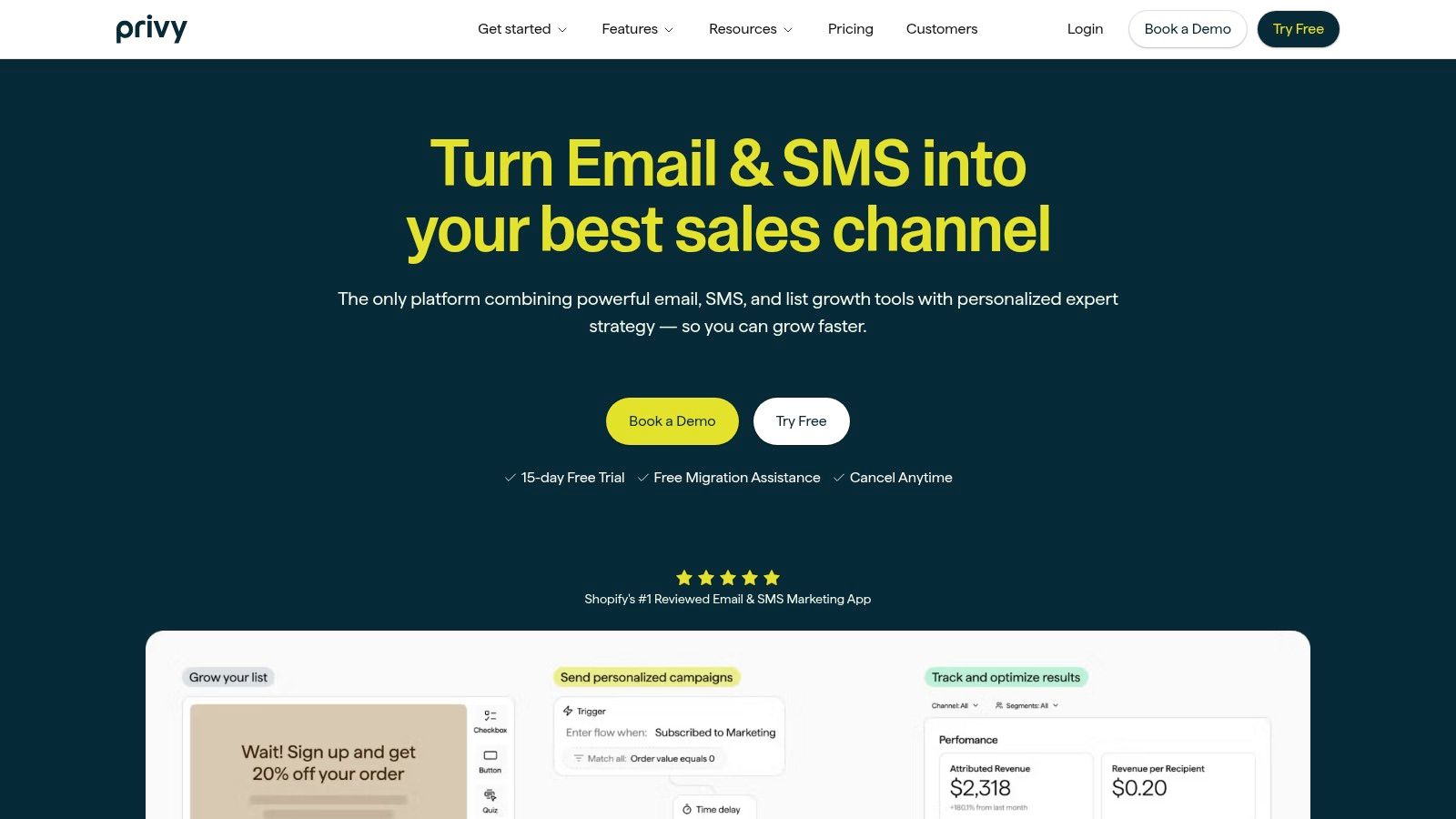
Privy sits in a useful middle ground. It bundles popups, email, and SMS into one Shopify-friendly setup, which makes it attractive for stores that want fewer vendors and a fast launch path. If you're early-stage or lean on a small team, that simplicity matters.
The big advantage is speed. You can get forms live, create offers, and launch basic automations without building a more complex stack from day one.
Where Privy works best
Privy is a good fit when your main problem is operational drag. You don't want a dedicated popup app, a separate ESP, and an SMS tool stitched together if the store doesn't yet need that level of specialization.
Its on-site tools include popups, display rules, and Shopify coupon creation. On the messaging side, it gives you email and SMS automations through a relatively approachable builder. For many brands, that's enough to get welcome flows and basic recovery programs moving.
A practical comparison helps here. If SmashPops is for making capture more engaging, Privy is for making setup more consolidated. If you're weighing static forms versus interactive engagement, this broader view of interactive content marketing for ecommerce is useful context.
Privy is rarely the final system for a sophisticated retention team. It is often a sensible first system for a store that needs momentum more than complexity.
The downside is that advanced segmentation and attribution aren't its strongest area. Once your list grows and your campaigns depend on more granular customer behavior, you may outgrow it. That doesn't make it the wrong choice. It just means you should pick it because you want an integrated starter stack, not because you expect it to behave like a heavyweight CRM.
You can learn more on the Privy website.
3. Klaviyo
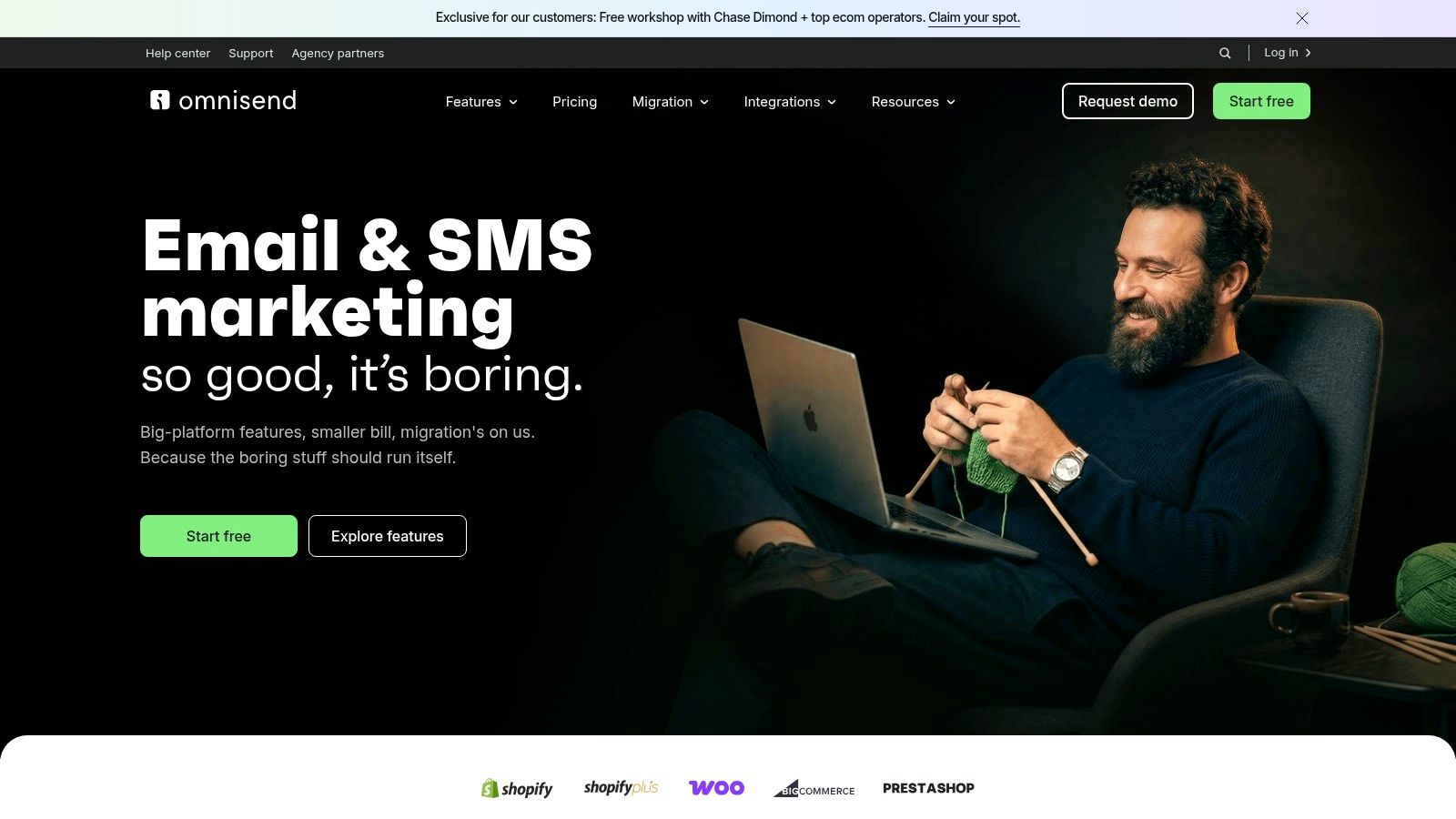
Klaviyo is the default answer for a reason. It combines email, SMS, customer data, and revenue attribution in a way that maps naturally to how Shopify brands market. Orders, product views, carts, checkouts, and fulfillment activity can all feed segmentation and automation.
When a store gets serious about lifecycle marketing, Klaviyo usually becomes the operating system behind it.
Why Klaviyo is still the default
Klaviyo is the single most-adopted third-party marketing tool in the Shopify ecosystem, appearing on 43.1% of stores analyzed in one 2026 benchmark study, according to Technology Checker's Shopify analytics trends report. That level of adoption tells you something important. For many Shopify teams, behavioral segmentation and triggered flows are no longer advanced tactics. They're baseline requirements.
Klaviyo is best when you want your stack to react to commerce data, not just campaign schedules. Its flow builder, segmentation model, testing tools, and Shopify-specific templates make it strong for welcome series, abandonment recovery, post-purchase, replenishment, and win-back.
If you use SmashPops or another capture tool, this guide on sending collected Shopify lead data into providers like Klaviyo or Mailchimp covers the integration side.
The trade-off is cost and complexity. Klaviyo gets expensive as your active profile count and message volume grow, and very small stores often underuse its capabilities. But if you already know you need granular segmentation, commerce-event triggers, and reliable attribution, it's one of the most practical investments in a Shopify stack.
You can review its platform on the Klaviyo website.
4. Omnisend
Omnisend is often the answer when a merchant says, “I want ecommerce-focused automation, but I don't want to wrestle with a complex platform.” That's its lane. It combines email, SMS, and forms in one dashboard and gets useful flows live quickly.
For many Shopify stores, that balance is enough. Not every team needs the depth of Klaviyo on day one.
Best for fast lifecycle setup
Omnisend's strength is speed with structure. The platform is built around common ecommerce workflows, especially cart and checkout recovery, welcome sequences, and cross-channel messaging. If your team wants to install, connect the catalog, and start sending with minimal friction, Omnisend does that well.
It's especially practical for operators who value prebuilt templates and clear reporting over endless flexibility. The editor can feel more prescriptive than higher-end ESPs, but that's also why teams often launch faster inside it.
One way I think about Omnisend is this:
- Choose Omnisend if: you want a fast, ecommerce-native email and SMS setup.
- Skip it if: you need highly custom segmentation logic or deep attribution modeling.
- Expect good results when: your store has straightforward retention flows and a team that values execution speed.
The best use case is a store that has outgrown basic email tools but doesn't want to jump straight into a more complex data-heavy system. In that scenario, Omnisend gives you meaningful automation without asking for a full retention ops function.
You can explore it on the Omnisend website.
5. Postscript
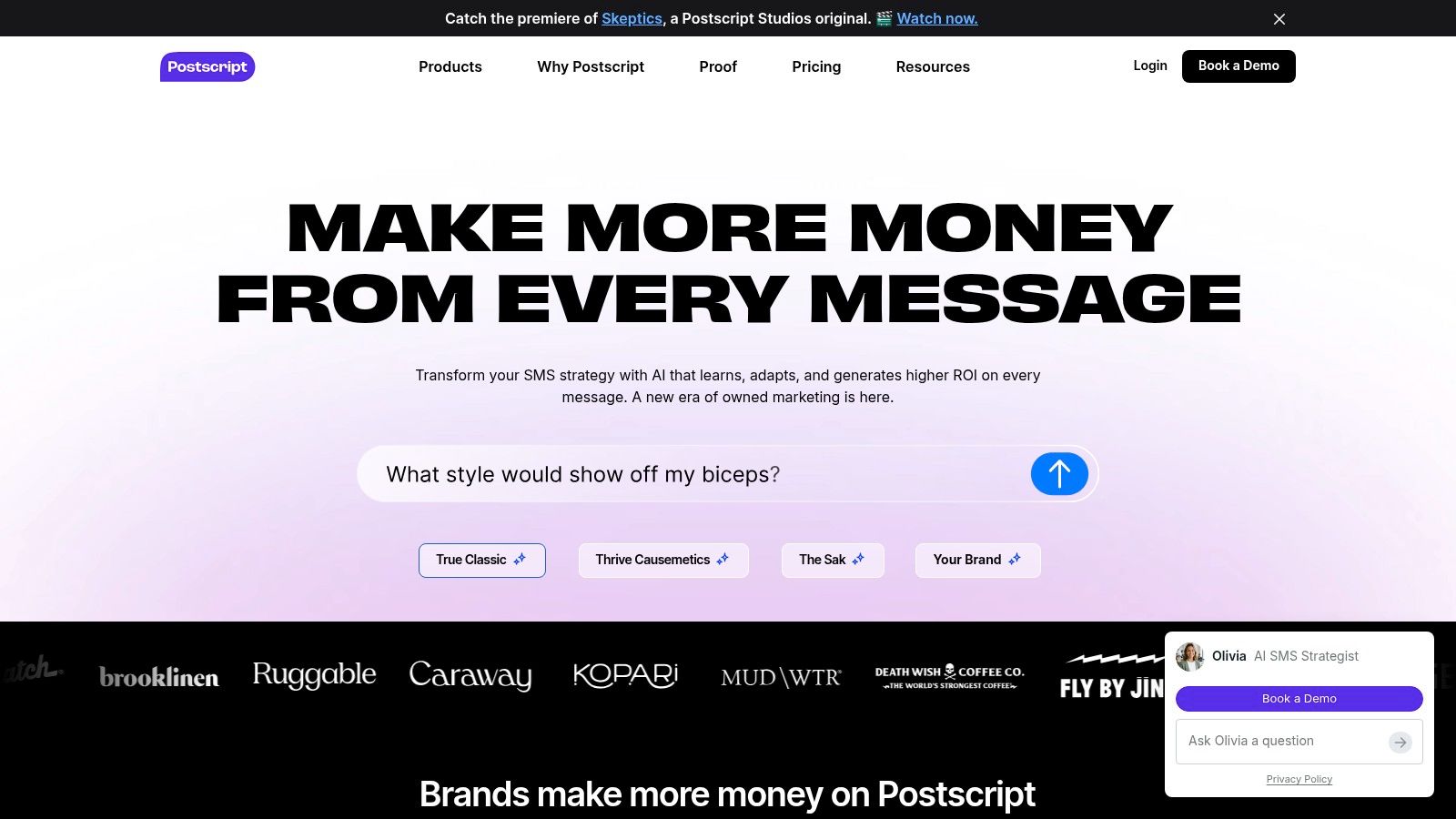
Postscript is what I'd look at when SMS is no longer an add-on and needs to become a real channel. It's Shopify-first, focused, and designed around compliant list growth, conversational messaging, and revenue-oriented automation.
That focus matters because SMS usually works best when you treat it differently from email. It's a tighter channel, more immediate, and less forgiving of lazy campaign strategy.
When SMS deserves its own tool
Postscript shines when a brand wants deep Shopify-aware SMS flows without bundling that work into a broader platform by default. Automated triggers, two-way messaging, and managed-service options make it especially useful for stores that are prepared to put real attention into the channel.
This is not the best first app for a brand that only wants to send the occasional text blast. It becomes more valuable when you're thinking about acquisition, recovery, retention, and support-style interactions in one SMS motion.
SMS should feel timely and specific. If every message reads like a compressed email campaign, performance usually degrades and unsubscribes rise.
The main trade-off is channel concentration. If your team wants a unified email-and-SMS command center, an ESP-led stack may fit better. But if SMS is strategically important and deserves a specialist, Postscript is one of the more natural Shopify choices.
You can evaluate its setup and services on the Postscript website.
6. Attentive
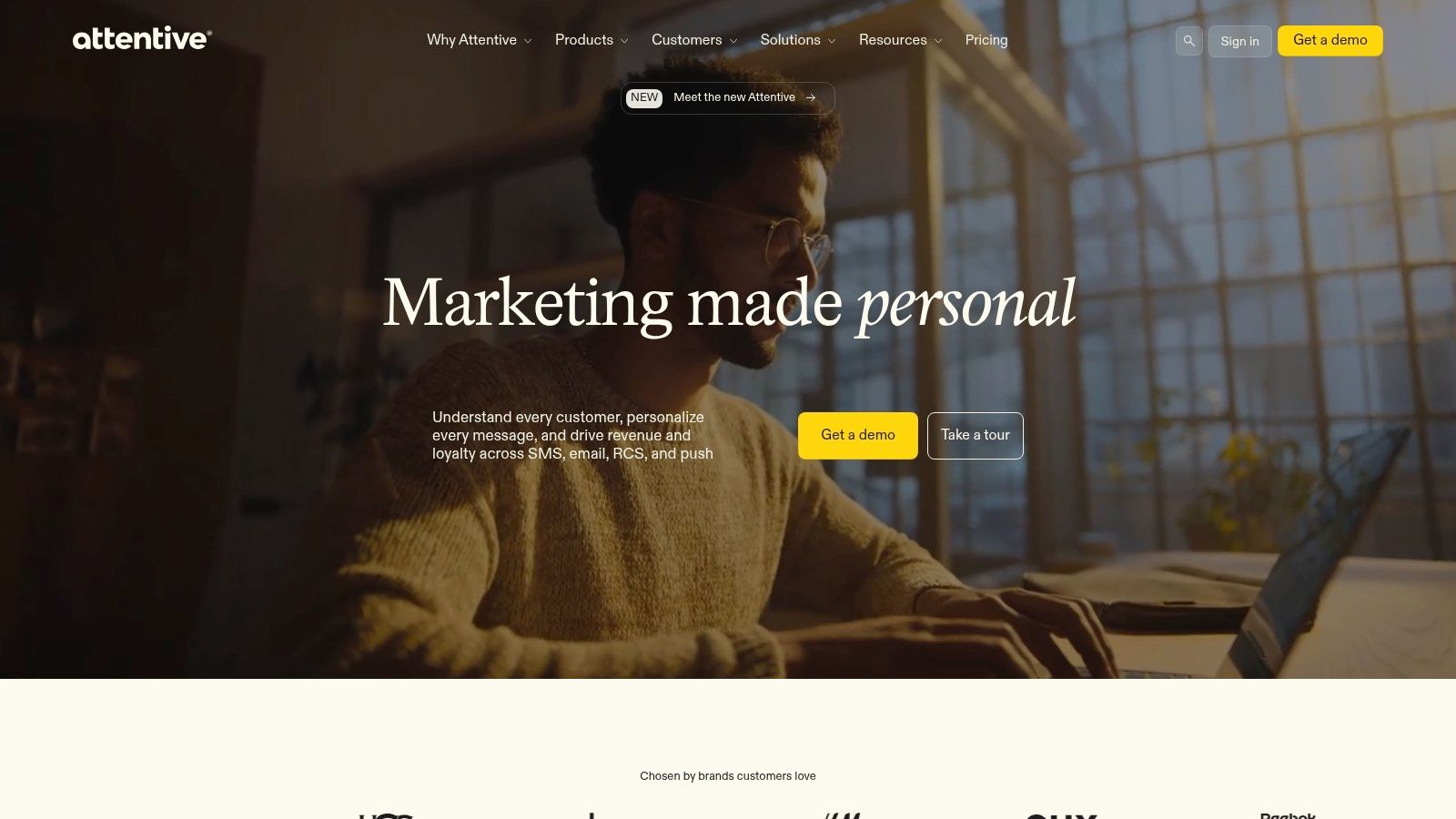
Attentive is built for brands operating at a larger scale, especially those with serious list sizes, major promotional periods, and a need for stronger support around compliance and deliverability. It's known for SMS, but the platform now stretches across email, RCS, and push as well.
That makes it less of a point solution and more of a messaging suite for teams with real channel complexity.
Enterprise messaging without patchwork
Attentive fits brands that don't want to assemble separate systems for every owned messaging channel. Unified customer profiles, cross-channel journey support, and enterprise-oriented services make it more appealing to larger Shopify and Shopify Plus operations than to a newer store.
Its text-to-buy capabilities with Shop Pay are especially relevant for merchants trying to reduce purchase friction from message to checkout. That's the kind of feature that matters more at scale, where small efficiency gains across a large audience can justify a premium tool.
Still, most smaller stores won't need it. Attentive is generally sales-led, usage-based, and packaged for brands that already know messaging is central to their growth model.
If you're deciding between Attentive and a lighter tool, ask one question first: do you need advanced cross-channel messaging infrastructure, or do you mostly need a strong SMS program? If it's the latter, Attentive may be more platform than you need.
You can review the platform on the Attentive website.
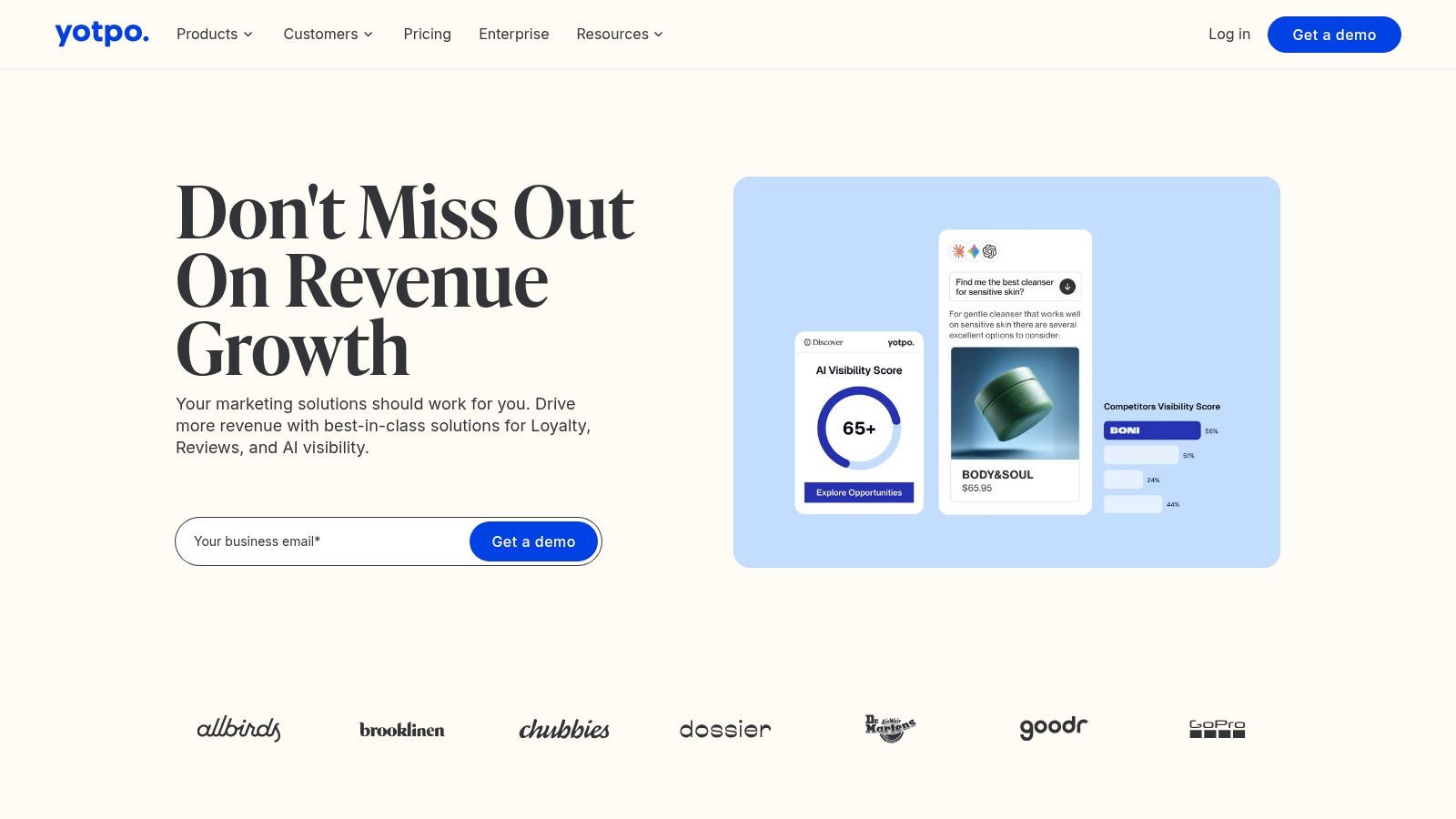
7. Yotpo
A lot of Shopify tool roundups lean too hard on acquisition and ignore what happens after the first purchase. Yotpo earns its place because retention often improves faster when you strengthen proof and loyalty, not just traffic.
Reviews, user-generated content, loyalty, and referrals sit closer to actual purchase confidence than many merchants realize.
Retention through proof and loyalty
Yotpo works best when you want modular retention infrastructure. You can start with reviews and UGC, then expand into loyalty and referrals as the brand matures. That path is useful because not every store needs a loyalty program immediately, but almost every store benefits from stronger product proof.
This category matters even more because retention and measurement are getting more attention as acquisition costs rise. Saras Analytics argues that the overlooked issue isn't just feature comparison, but how merchants layer tools in a way that protects contribution margin after ad, app, and discount costs, as discussed in Saras Analytics' guide to Shopify marketing tools.
Yotpo's trade-off is packaging. It can feel enterprise-leaning compared with simpler review tools, and stores with modest order volume may not need its broader suite right away.
A practical rollout usually looks like this:
- Start with reviews: Build trust on product pages first.
- Add loyalty later: Introduce loyalty when repeat purchase behavior justifies it.
- Use referrals selectively: Referral mechanics work best when customer satisfaction is already high.
You can see its product suite on the Yotpo website.
8. Nosto
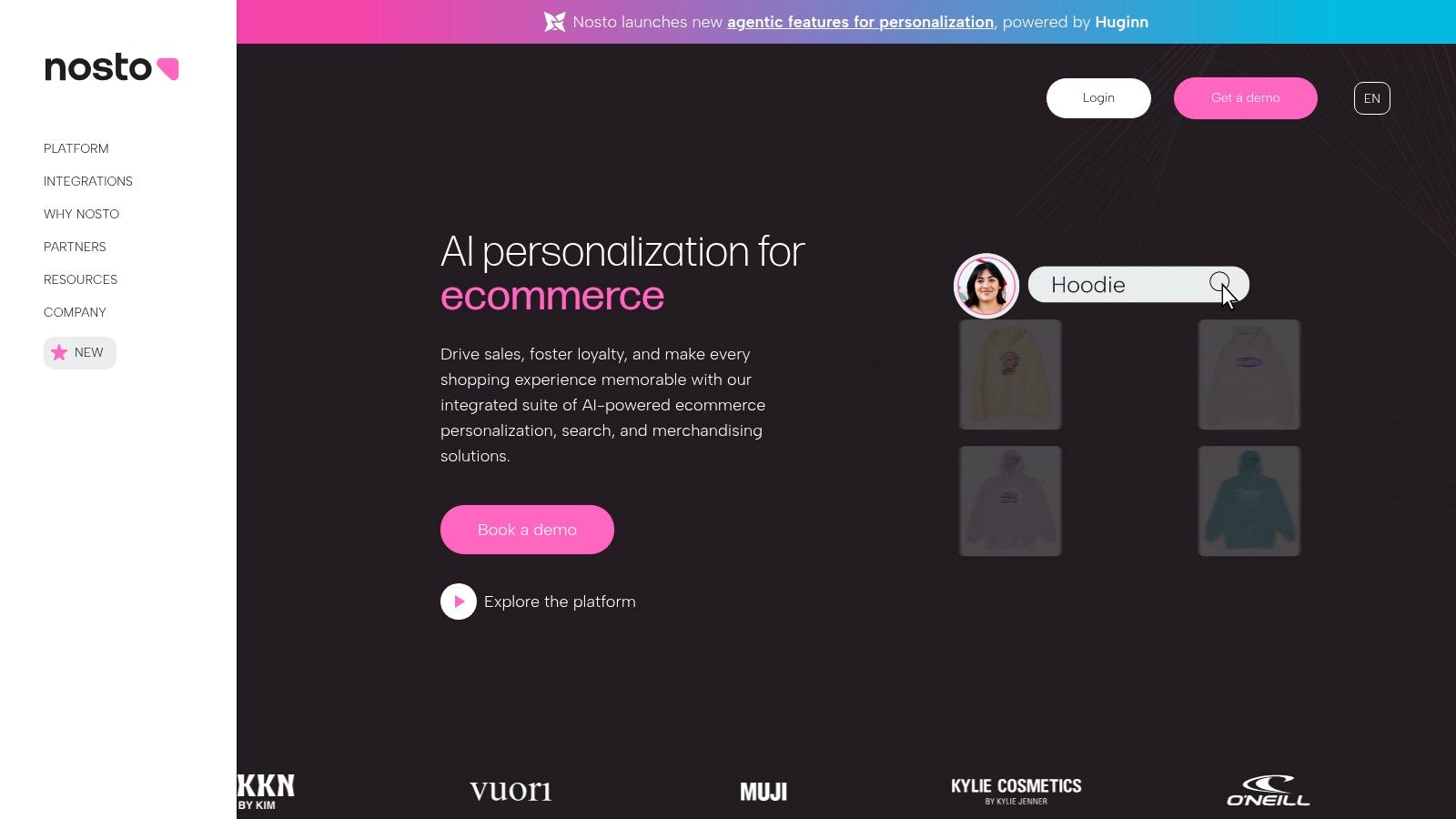
Nosto belongs in the optimize category. It's less about collecting a lead and more about shaping what shoppers see once they're already on-site. Product recommendations, merchandising controls, search, and post-purchase upsells all sit in that zone.
That makes Nosto more valuable for brands with enough traffic, enough SKU depth, or enough merchandising complexity to benefit from personalization.
Personalization for merchandising teams
Nosto is strongest when your catalog and merchandising strategy are substantial enough that generic sorting and static recommendations leave money on the table. It gives teams more control over how products appear across product pages, collection pages, carts, and post-purchase moments.
This isn't usually the first app I'd buy for a smaller store. If you still have weak capture, weak email automation, or weak review volume, those gaps often matter more. Nosto becomes compelling after the foundations are in place.
Better personalization doesn't fix weak demand. It helps you monetize demand you already have.
Its pricing is individualized rather than publicly standardized, which means it can be excessive for simple use cases. But for brands that actively manage merchandising, promotions, margins, and catalog behavior, it can become a meaningful optimization layer.
You can review the platform at the Nosto website.
9. OptiMonk
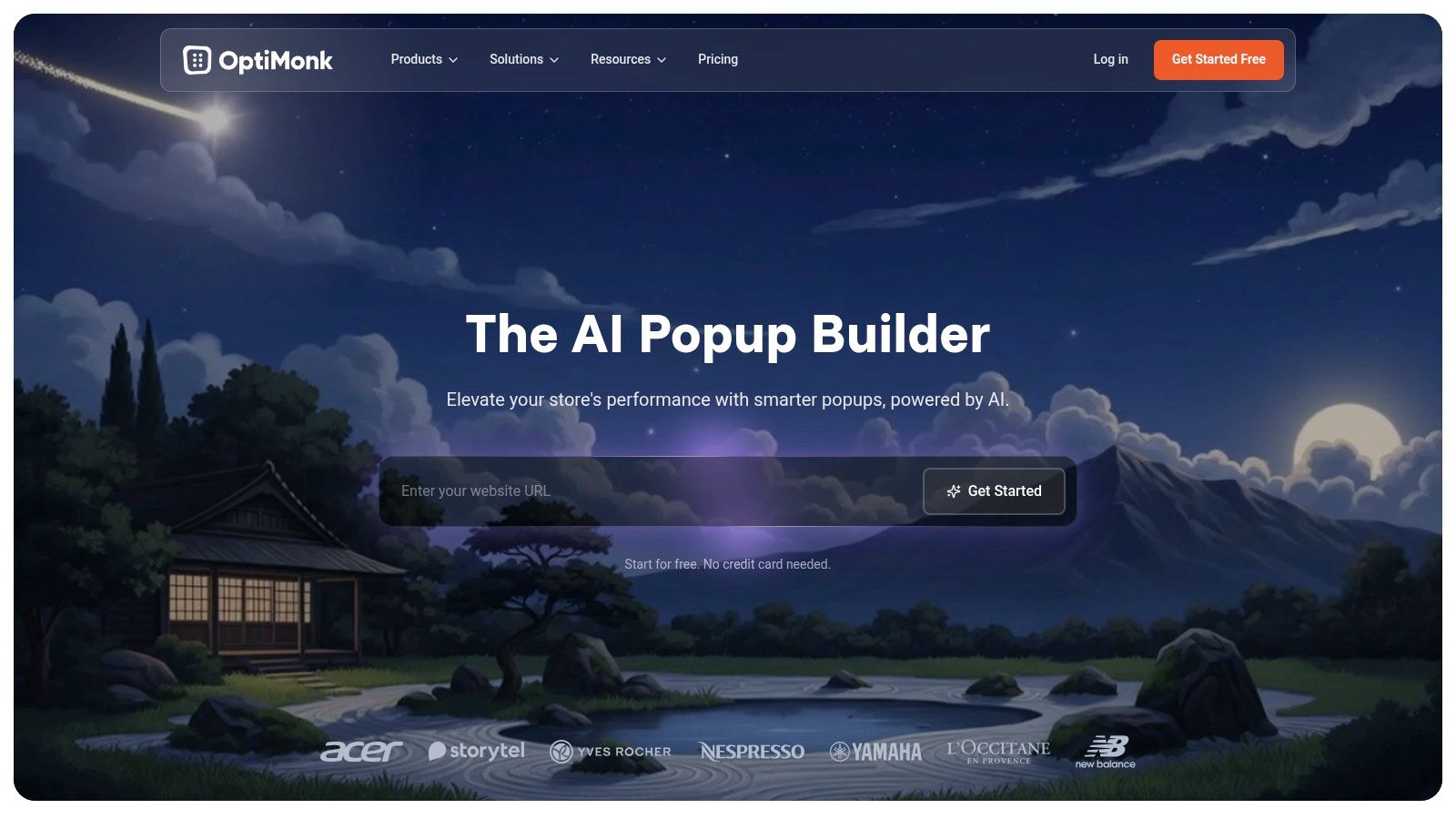
OptiMonk is a strong fit for marketers who think in terms of conversion rate optimization first and app categories second. It handles popups, slide-ins, sticky bars, product messaging, targeting, and testing in a way that feels built for iteration.
It's not as differentiated as SmashPops on interactivity, but it's broader in standard on-site promotion use cases.
A practical CRO-first capture layer
OptiMonk is useful when you want targeting discipline. Behavior-based segmentation, device targeting, testing, and Shopify-synced single-use discounts make it practical for stores that need to control who sees what and when.
It also plays well with downstream tools like Klaviyo and Omnisend, which is exactly what a capture layer should do. One 2026 report estimates roughly 2.86 million live Shopify stores, while another reports that 14.2% of stores have installed the Klaviyo app, according to Store Leads' Shopify report. That suggests a mature ecosystem where capture tools need to feed better first-party data into the rest of the stack, not just collect addresses in isolation.
The main platform limitation is Shopify's own restriction around checkout and thank-you page triggers. That isn't an OptiMonk flaw so much as a structural boundary you need to plan around.
I'd choose OptiMonk over a simpler popup app when testing discipline matters more than novelty. I'd choose SmashPops over OptiMonk when the core problem is low engagement with standard forms.
You can learn more on the OptiMonk website.
10. Justuno
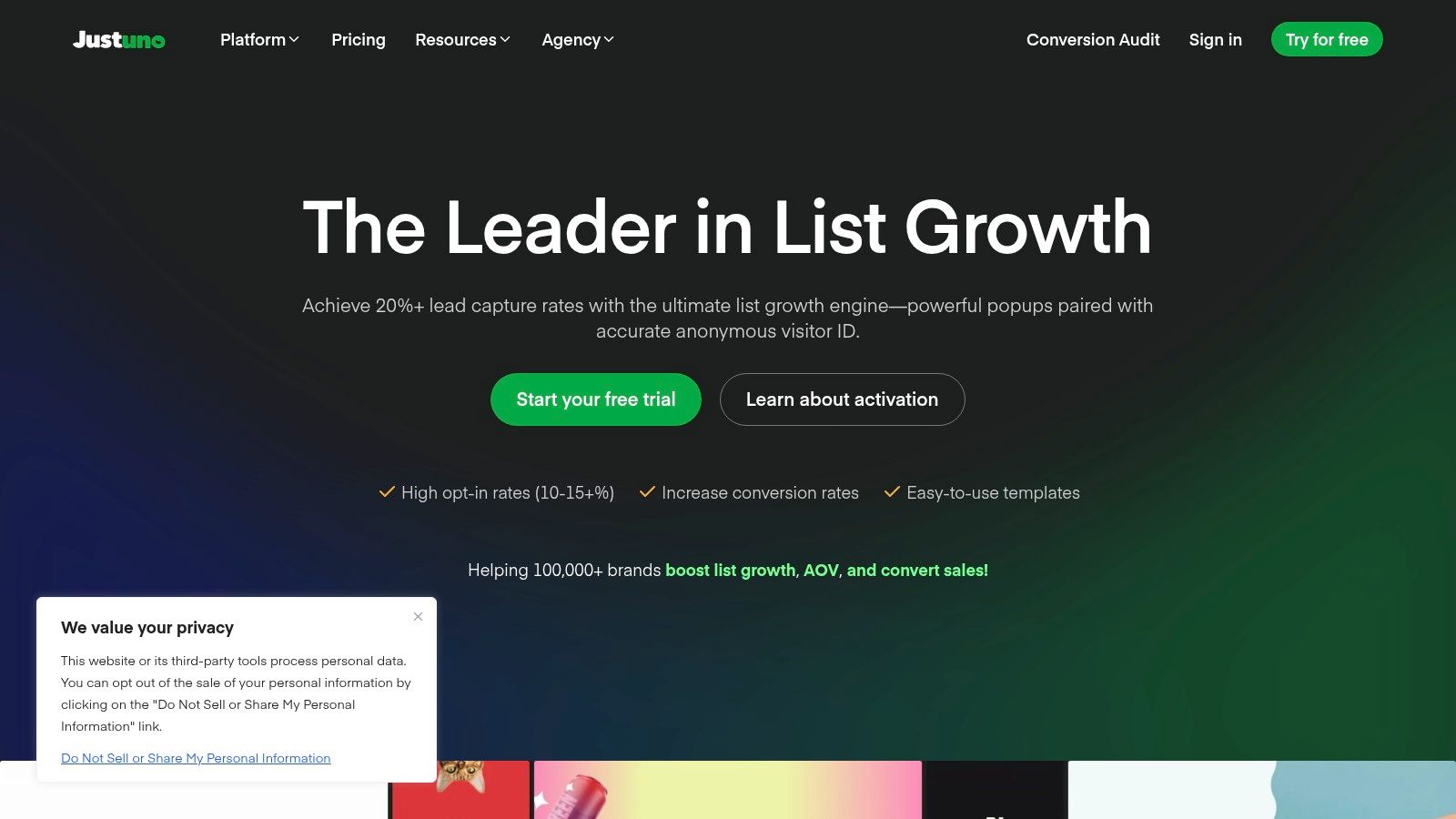
Justuno has been around long enough to feel less like a trend-driven popup app and more like a conversion platform. It covers lead capture, promotions, personalization, testing, audience logic, and workflow-driven CRO.
That breadth makes it attractive for teams that already know they'll test aggressively.
Built for teams that test aggressively
Justuno works best when you're willing to put strategy time into the platform. If you only want a basic popup and a discount code, it's probably more than you need. If you want multivariate testing, more advanced segmentation, AI-assisted recommendations, and stronger audience control, it earns attention.
This category also reflects a bigger shift in Shopify marketing. Recent guidance increasingly emphasizes targeted, behavior-based experiences and retention-first strategies over broad acquisition tactics, a point discussed in Concord's writeup on Shopify tools and personalized brand growth. That's the environment Justuno fits best.
The trade-off is effort. Advanced testing and personalization platforms rarely create value by installation alone. Someone has to define hypotheses, review results, and keep campaigns aligned with margin, UX, and brand voice.
If your team likes experimentation, Justuno can become a serious optimization layer. If your team is short on bandwidth, it may sit underused.
You can explore plans and integrations on the Justuno website.
Top 10 Shopify Marketing Tools Comparison
| Product | Core Features ✨ | UX/Quality ★ | Value & Pricing 💰 | Target Audience 👥 | Unique Selling Points 🏆 |
|---|---|---|---|---|---|
| SmashPops 🏆 | 6 gamified templates (Spin, Scratch, Claw, etc.), granular triggers, auto one‑time coupons, Klaviyo/MailChimp/CSV | ★★★★, mobile‑friendly, conversion analytics | 💰 Free 7‑day trial; no hidden fees; pricing via site | 👥 Shopify merchants, ecommerce marketers, agencies | ✨ Gamified pop‑ups → up to 6× emails; auto unique coupons; deep targeting 🏆 |
| Privy | Popups & spin‑to‑win, email + SMS, Shopify coupon creation | ★★★★, quick, no‑code setup | 💰 Predictable pricing; pageview/SMS credit plans | 👥 Small‑mid Shopify stores | ✨ Integrated capture + messaging; fast deployment |
| Klaviyo | Deep Shopify event sync, visual flow builder, on‑site forms | ★★★★★, advanced segmentation & attribution | 💰 Usage‑based (active profiles), can scale costly | 👥 Data‑driven brands & growth teams | ✨ Rich data model + revenue attribution; powerful automations |
| Omnisend | Email + SMS automations, prebuilt ecommerce flows, reporting | ★★★★, balanced power & simplicity | 💰 Free + paid tiers; competitive for SMBs | 👥 Small‑mid ecommerce teams | ✨ Shopify‑focused templates & recovery flows |
| Postscript | Conversational SMS, Shopify triggers, managed services option | ★★★★, SMS‑first, compliance tooling | 💰 Usage‑based SMS billing; transparent carrier costs | 👥 Brands scaling SMS as a core channel | ✨ Two‑way SMS and Postscript Plus managed services |
| Attentive | Cross‑channel journeys (SMS, email, RCS), deliverability tools | ★★★★★, enterprise reliability & peak performance | 💰 Sales‑led, usage‑based; enterprise pricing | 👥 Enterprise / Shopify Plus brands | ✨ Text‑to‑buy, concierge strategy & deliverability support |
| Yotpo | Reviews & UGC, Loyalty & Referrals modules, rich widgets | ★★★★, strong SEO & conversion impact | 💰 Modular pricing; can trend higher | 👥 Brands focused on reviews, UGC & loyalty | ✨ Rich review displays + integrated loyalty & referral paths |
| Nosto | AI recommendations, on‑site personalization, post‑purchase upsells | ★★★★, powerful merchandising controls | 💰 Sales‑led, tailored packages | 👥 Brands optimizing AOV & LTV | ✨ AI‑driven product recommendations & dynamic merchandising |
| OptiMonk | Popups, sticky bars, behavioral targeting, single‑use code sync | ★★★★, marketer‑friendly targeting & A/B testing | 💰 Tiered plans; Shopify coupon sync | 👥 Marketers wanting on‑site personalization | ✨ Behavioral segmentation + easy Shopify integration |
| Justuno | Promotions, banners, multivariate testing, workflow builder | ★★★★, CRO & testing focused | 💰 Free tier + transparent self‑serve pricing | 👥 Teams prioritizing CRO & experimentation | ✨ Multivariate testing, AI recommendations & strategic services |
Your Next Move Start with Your Biggest Bottleneck
A store can have solid traffic, decent products, and a capable team, yet growth still stalls because the stack is solving the wrong problem. I see this often with Shopify brands that buy an advanced email platform before fixing list growth, or add a loyalty program before they have enough first-time buyers to make loyalty matter.
Start with the bottleneck. If list growth is weak, focus on capture. If subscribers are there but repeat purchase is soft, fix nurture and retention. If conversion rate or average order value lags, work on-site with personalization, testing, and merchandising. The point of this guide is not to help you collect apps. It is to help you build a stack in the right order.
The four-function framework keeps that decision simple. Capture tools get more visitors onto your email or SMS list. Nurture tools turn that data into flows, campaigns, and segmented follow-up. Retention tools add proof, loyalty, referrals, and reasons to come back. Optimization tools improve what happens on the site itself, from offers and product discovery to cart growth. Stores that ignore this sequence usually end up paying for overlapping features they never fully use.
A practical stack for many brands looks like this. Start with SmashPops, Privy, OptiMonk, or Justuno if the immediate problem is turning traffic into owned audience. Feed those contacts into Klaviyo or Omnisend for lifecycle email and basic cross-channel automation. Add Postscript or Attentive once SMS volume and channel importance justify a dedicated platform. Layer in Yotpo when social proof, loyalty, or referrals can improve repeat revenue. Bring in Nosto when merchandising and personalization can move conversion rate or AOV enough to cover the extra complexity.
There are trade-offs. A bigger stack gives you more control, but it also adds setup time, integration work, reporting complexity, and app spend. Smaller stores usually get better returns from a focused stack that does one job well at each stage of the funnel.
SmashPops deserves mention here for a specific reason. Standard popups often fail because the interaction feels generic, especially on mobile. A gamified capture layer changes that first exchange and can help stores collect more first-party data from the traffic they already paid for. That makes it a sensible first test for brands whose main issue is top-of-funnel list growth, not email automation depth or enterprise segmentation.
Use this guide like an operator, not a shopper. Identify the constraint. Install the tool that addresses that constraint. Measure the lift in list growth, conversion rate, repeat purchase, or AOV, then decide what belongs in the next layer of the stack.
