3.17%. That's the average purchase conversion rate across ecommerce sectors, while top-performing niches reach 5% to 15%, according to VWO's 2024 funnel benchmark study. That gap is the whole story of conversion funnel optimization. Most stores don't have a traffic problem. They have a progression problem.
I audit funnels for ecommerce teams by looking at what users do, not what the funnel diagram says they should do. That matters more now because the modern funnel isn't a straight line from ad click to checkout. People browse, leave, come back from email, spin a wheel, grab a coupon, compare products on mobile, then purchase later on desktop. If you still optimize as if every customer moves in one clean sequence, you'll miss major leaks.
The framework I keep coming back to is AARRR: Awareness, Acquisition, Activation, Retention, Revenue. Not as startup jargon. As a practical way to inspect where intent gets created, where momentum stalls, and where gamified interactions change the path entirely.
Table of Contents
- Why Most Ecommerce Funnels Are Leaking Money
- Map Your Funnel and Find the Leaks
- Optimizing Acquisition with Gamified Experiences
- Boosting Retention and Revenue with Smart Triggers
- How to A/B Test When Gamification Skews Your Data
- Building Your Continuous Optimization Loop
Why Most Ecommerce Funnels Are Leaking Money
The gap that matters
Most ecommerce teams look at conversion as a sitewide number. That view is too blunt to be useful. A store can sit near the average and still lose a large share of revenue inside product pages, cart flow, or post-capture follow-up.
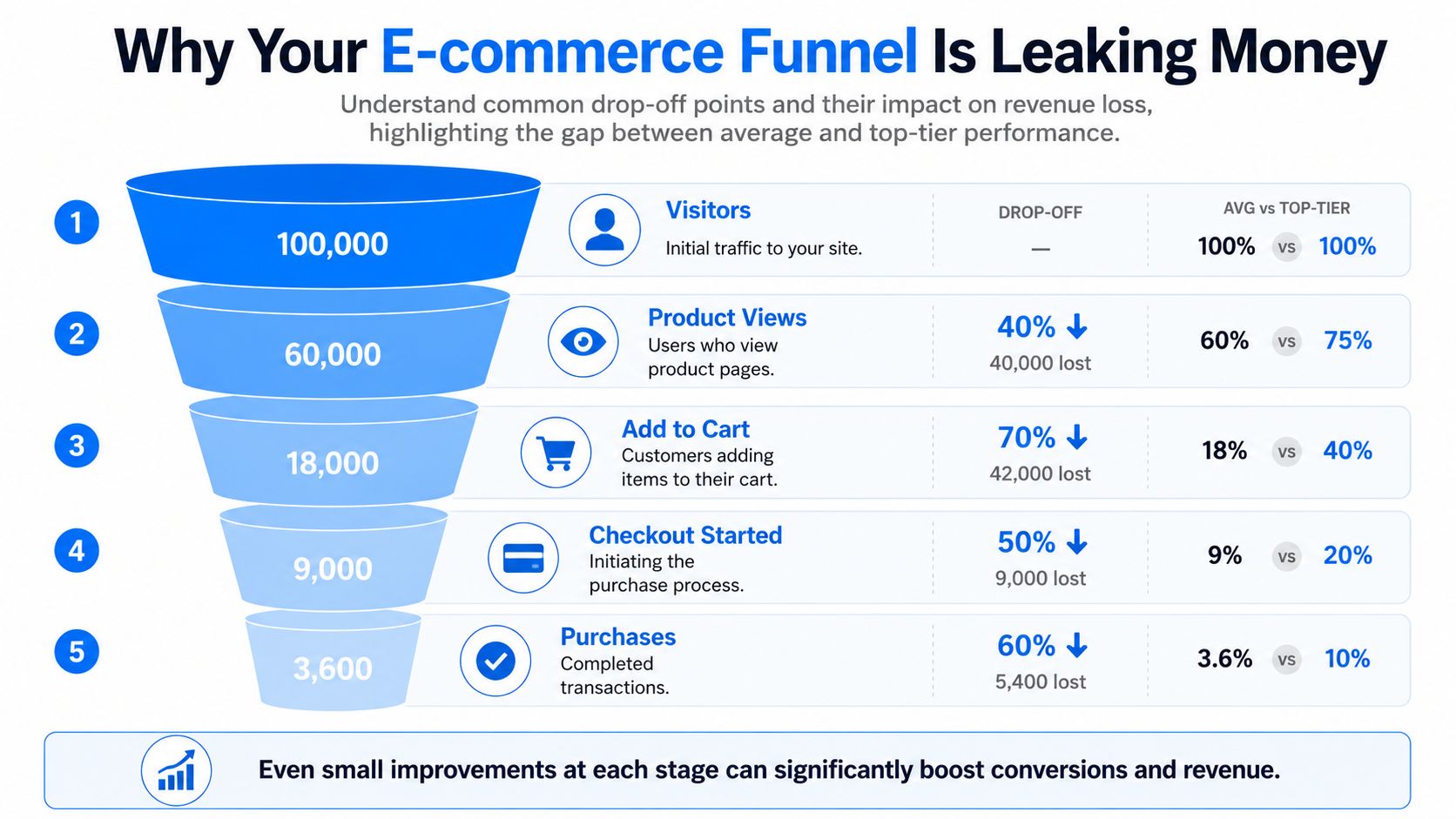
That's why I care less about the headline conversion rate and more about stage-to-stage movement. A weak funnel usually hides in the transitions: visitor to product viewer, product viewer to cart, cart to checkout, first order to repeat behavior. The leak is rarely everywhere at once.
Practical rule: If you can't name the exact stage where momentum drops, you're not doing conversion funnel optimization yet. You're just watching revenue happen after the fact.
The problem gets worse when teams use an outdated linear model. A customer might enter through a paid ad, engage with a scratch card, leave, return from SMS, add to cart, hit an exit-intent offer, and convert later from email. That's still one funnel. It just doesn't look like the old awareness-to-checkout diagram.
AARRR works better than a basic funnel view
I use AARRR because it forces a more operational audit:
- Awareness identifies which traffic sources create relevant sessions.
- Acquisition focuses on capturing a next step such as email or SMS.
- Activation checks whether visitors take meaningful product actions.
- Retention measures whether first engagement turns into repeat attention.
- Revenue tracks where purchase intent becomes actual sales.
This model also handles gamification better. A spin wheel or pick-a-gift experience doesn't just capture an email. It can create a micro-journey of anticipation, reward, reminder, and delayed conversion. That loop sits across acquisition, activation, and revenue, which is why so many standard funnel reports misread it.
The practical takeaway is simple. If your funnel analysis assumes one entry and one exit, it will undercount the impact of interactive touchpoints and overstate the performance of whatever page got the final click.
Map Your Funnel and Find the Leaks
Start with the real journey
A useful audit starts with a whiteboard or a simple flow map, not a dashboard. Write down the actual touchpoints a shopper can hit: paid ad, landing page, collection page, product page, pop-up interaction, email capture, cart, checkout, thank-you page, post-purchase email, return visit.
Then map the alternate paths. At this stage, many teams stop too early. If a user enters a game, exits, sees a teaser bar later, then returns from a coupon email, that is not noise. That is the funnel.
I usually separate funnel paths into three buckets:
Direct purchase paths
Fast-moving sessions where users land, evaluate, and buy.Capture-first paths
Sessions where the sale doesn't happen immediately, but contact capture creates a second chance.Looping paths
Sessions shaped by reminders, rewards, repeat visits, and delayed conversion.
Don't map your intended funnel. Map the one your customers already use.
Key Metrics by Funnel Stage
Once the path is visible, the metrics become obvious. You don't need dozens. You need the right few at each stage.
| Funnel Stage | Primary Metric | Secondary Metrics to Track |
|---|---|---|
| Awareness | Qualified landing sessions | Traffic source, landing page engagement, new vs returning visitor mix |
| Acquisition | Email or SMS capture rate | Pop-up interaction rate, form completion behavior, coupon claim behavior |
| Activation | Product engagement | Product page views, add-to-cart behavior, category depth, repeat product views |
| Retention | Return visit behavior | Email click behavior, revisit patterns, offer re-engagement, audience segment response |
| Revenue | Purchase conversion | Cart abandonment behavior, checkout initiation, coupon-assisted orders, post-purchase follow-up response |
What a useful audit actually looks like
After mapping and metrics, I inspect the funnel in this order:
First, traffic-message match
If ad intent and landing-page intent don't align, the rest of the funnel won't matter much.Second, product discovery
Can users find a clear path to a product decision, or do they stall in category browsing?Third, capture logic
Is the opt-in offer relevant to the visit context, or is it just interrupting?Fourth, checkout friction
Regarding checkout friction, analytics, session replay, heat maps, and funnel reports usually confirm what users are already feeling.Fifth, re-entry design
If users leave, what brings them back? Email? SMS? Teaser bar? Saved incentive? Most stores underbuild this part.
A good audit doesn't produce a giant list. It produces a ranked set of fixes. I want one issue per stage, tied to a clear hypothesis. For example: product viewers aren't adding to cart because the CTA is visually weak, or game entrants are claiming coupons without enough downstream tracking to separate curiosity from purchase intent.
That last point matters more now. Interactive funnels create more engagement data, but they also create more chances to misread behavior. Without event-level tracking across touchpoints, a team can improve acquisition and still fail to improve revenue.
Optimizing Acquisition with Gamified Experiences
Static forms lose to active participation
The old email capture pattern still appears everywhere: “Sign up for updates.” It underperforms because it asks for value before creating any. Gamified acquisition works better because it turns the first interaction into a small event.
A 2025 Digital Marketing Institute study found that merchants using gamified pop-ups saw a 3.4x higher email capture rate, but many still struggled to attribute downstream sales because standard frameworks don't fit these non-linear journeys. That's the measurement gap often felt after launching interactive campaigns.
What works in practice is matching the game to the moment. A first-time visitor needs a low-friction incentive. A carted visitor may respond better to a timed reward. A returning browser might need a teaser that reopens the interaction instead of showing the full pop-up again.
For teams exploring formats beyond static discounts, this overview of interactive content marketing examples is useful because it broadens the idea from “a popup” to “a behavior-shaping touchpoint.”
Three gamified plays that work in practice
I see three patterns repeatedly produce cleaner acquisition than generic overlays.
Welcome offer game
A spin wheel or scratch card works well on first-session traffic when the store needs a clear value exchange. The key is to keep the form short and the reward immediate.
Cart-value game
When a shopper has shown purchase intent, the game should feel like a conversion nudge, not a random interruption. Trigger it based on cart state, not pageview count alone.
Exit re-engagement game
This is one of the few cases where interruption can be productive. If a user is about to leave, giving them a last-action opportunity can recover the session or at least capture contact permission for follow-up.
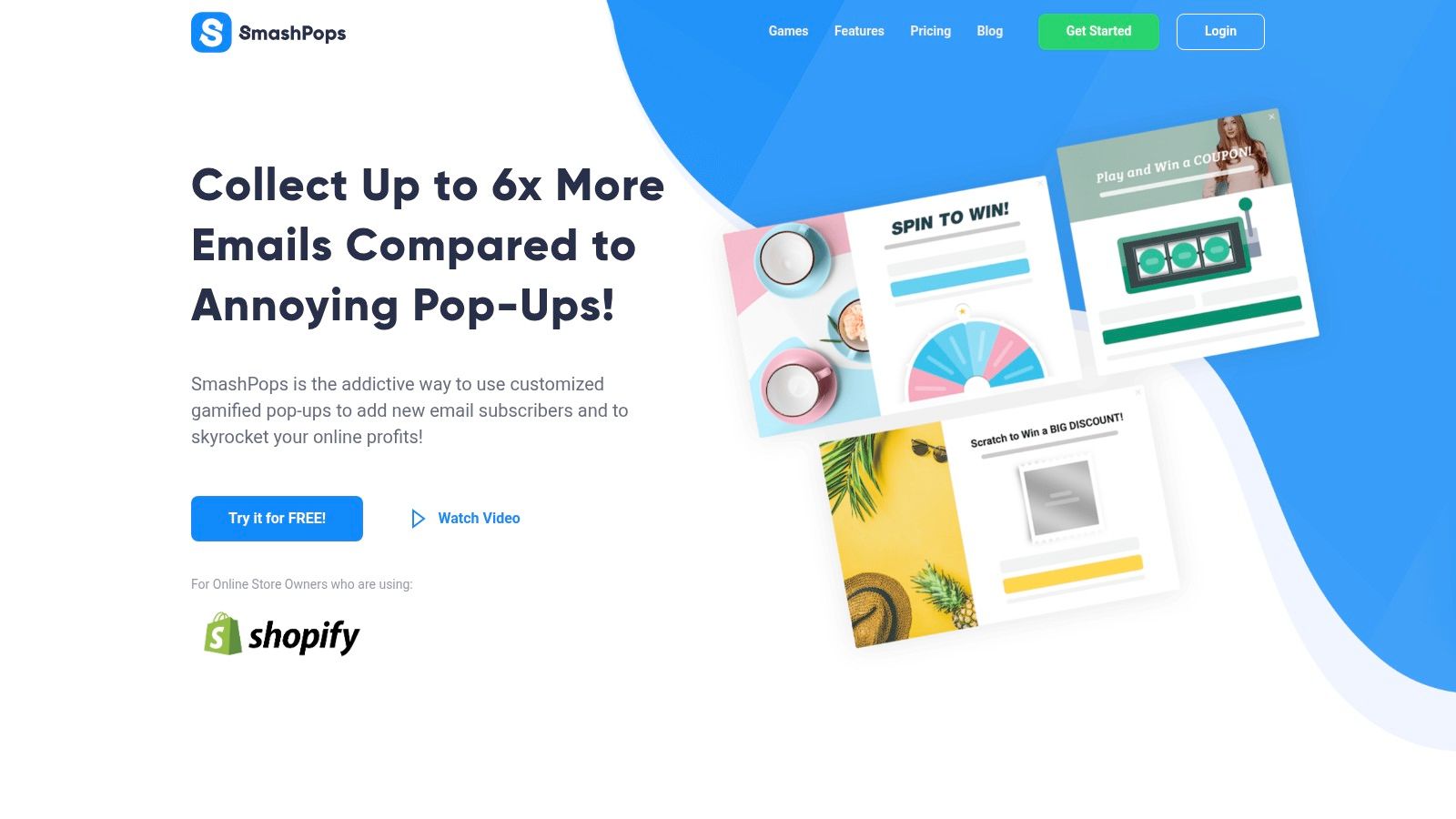
One option in this category is SmashPops, which supports game formats such as Spin the Wheel, Scratch Card, Pick a Gift, Slot Machine, Claw Machine, and Card Dance, along with triggers like exit intent, scroll depth, visit count, device type, referrer, and country. The operational value is less about novelty and more about being able to tie interaction format to shopper context.
Here's a quick demo format that shows how these interactions are typically deployed in-store:
How to track a circular path
Gamified acquisition creates a micro-funnel inside the main funnel. I track at least these event points:
- Game shown so you know exposure volume.
- Game engaged so you know interest.
- Reward claimed so you know capture completion.
- Coupon applied or revisited so you know delayed intent.
- Purchase completed so you can connect acquisition to revenue.
A game isn't the funnel win. The win is whether the game creates a measurable path into product evaluation, cart activity, and eventual purchase.
Without that event chain, teams end up celebrating email list growth while guessing at revenue impact.
Boosting Retention and Revenue with Smart Triggers
Triggers beat blanket offers
Most stores over-message and under-time. They show the same offer to everyone, regardless of whether the shopper is new, returning, engaged, hesitant, or one click from leaving. Smart triggers fix that by making the message conditional.

The strongest retention and revenue gains usually come from four trigger families:
- Exit intent for visitors showing abandonment behavior.
- Scroll depth for users consuming content but not acting.
- Visit count for repeat visitors who need a different message than first-timers.
- Cart value for shoppers where incentive strategy should match order context.
Segmentation starts paying back. Matomo's 2024 funnel optimisation analysis reported that businesses implementing systematic optimization reduced cart abandonment by an average of 15%, directly correlating to a 30% lift in direct sales. The same analysis found that businesses using audience segmentation and personalized content achieved a 25% higher conversion rate.
That aligns with what I see in audits. Generic offers create activity. Segmented offers create outcomes.
Where retention actually gets built
Retention doesn't begin after the sale. It starts the first time a visitor feels that the store understands context. A returning visitor who already dismissed a welcome discount shouldn't get the same pitch again. A carted visitor should see recovery logic, not top-of-funnel copy.
For cart recovery, I like to pair message timing with behavior:
| Trigger | Better message |
|---|---|
| Returning visitor with no purchase | New reason to act, not the same first-visit incentive |
| Exit from cart | Focus on completion friction, reassurance, or a targeted reward |
| High-scroll product engagement | Answer objections near the moment of evaluation |
| Repeat visits to the same category | Use category-specific reminders or tailored product recommendations |
A lot of brands misuse exit intent by treating it as a universal discount weapon. It works better when it addresses the likely reason for hesitation. Sometimes the right move is an offer. Sometimes it's clarity on shipping, returns, or fit.
If you want a deeper look at trigger timing and leave-detection mechanics, this guide to exit-intent technology in ecommerce covers the practical trade-offs.
The message should reflect the behavior that triggered it. If the trigger says “hesitation” and the copy says “first-time welcome,” the funnel feels disconnected.
Retention improves when the brand stops repeating itself and starts reacting to intent.
How to A/B Test When Gamification Skews Your Data
Why standard test logic breaks
Many teams launch a gamified pop-up, see a jump in immediate conversions, and declare the test won. That's where bad optimization starts. Gamification changes behavior fast, but not every fast change reflects stronger purchase intent.
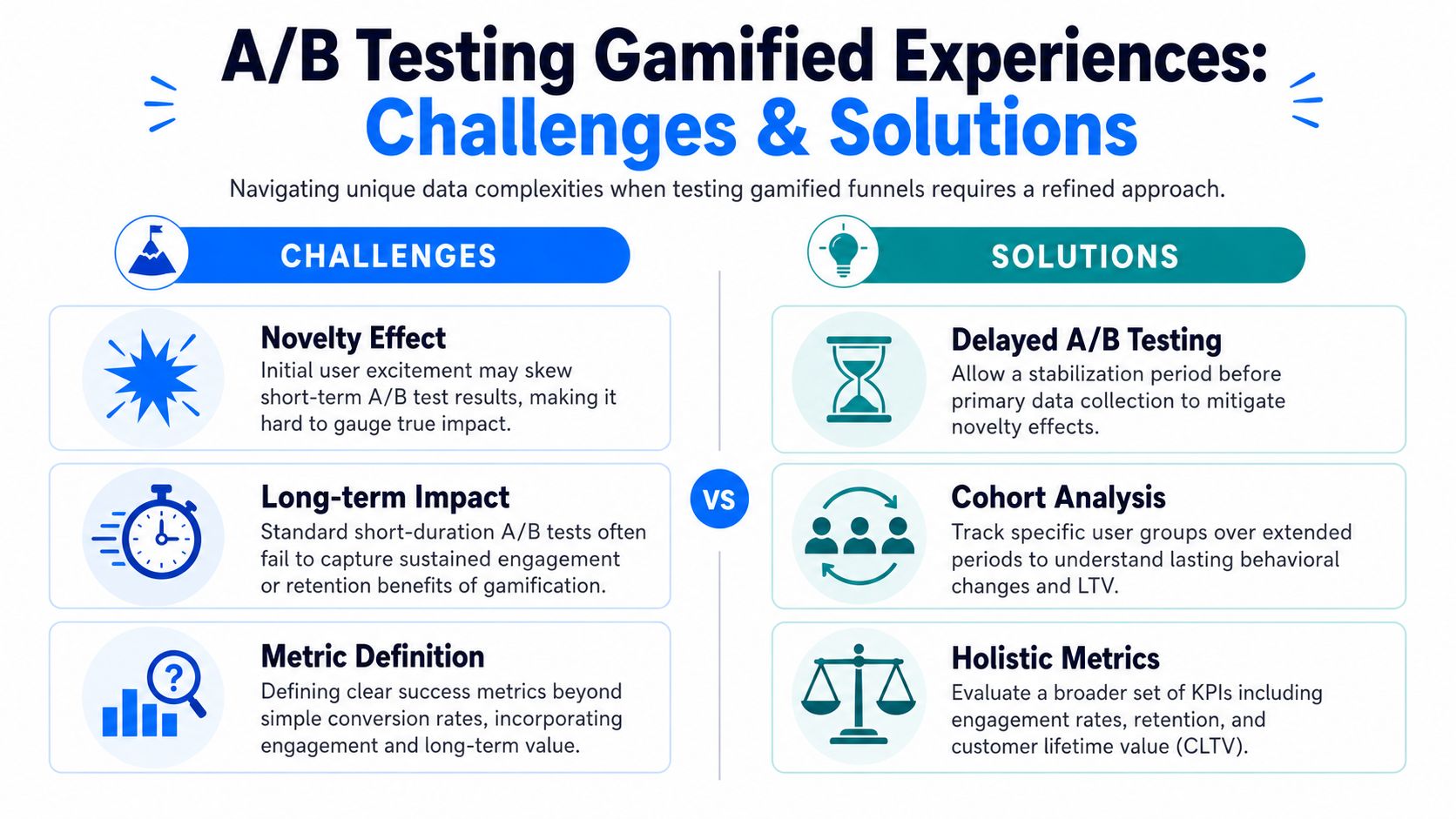
A 2025 Ecommerce Standards Council report found that 61% of failed funnel optimizations were caused by misattributing gamified reward spikes as genuine user intent improvements. The same report found that 89% of marketers using gamified pop-ups reported inconsistent A/B test outcomes because they didn't account for reward-driven inflation.
That matches a common pattern in live accounts. The reward creates urgency. Urgency creates action. But the action may be coupon claiming, not durable buying intent. If the test is judged too early, teams optimize the wrong thing.
A better testing framework for gamified funnels
When I test gamified experiences, I don't compare “game” versus “no game” and stop there. I isolate components.
Test the mechanic separately from the offer
A spin wheel with a discount is two variables. So is a scratch card with free shipping. If both change at once, you won't know whether the lift came from interactivity or incentive value.
Use a control that preserves intent context
The right control isn't always no popup. Sometimes it's a static popup with the same offer. That isolates the game layer.
Hold attribution long enough to capture delayed behavior
Immediate conversions matter, but they can't be the only scorecard in a gamified funnel. You need enough observation time to see revisits, coupon use, and post-capture purchases.
For teams that need a broader measurement mindset, this piece on alternatives to standard A/B testing is helpful because it pushes beyond simplistic winner-loser reporting.
Metrics that deserve more weight
In gamified testing, I care about metric hierarchy more than single-metric wins.
- Primary read should include downstream purchase behavior, not just form submissions.
- Secondary read should examine whether claimed rewards produce quality sessions later.
- Diagnostic read should review segment behavior, especially new versus returning visitors.
A useful reporting sequence looks like this:
- Engagement with the interactive unit
- Capture completion
- Return or continuation into product evaluation
- Cart and checkout behavior
- Purchase outcome
If a gamified test “wins” on captures but weakens downstream buying quality, it didn't win. It just moved the distortion earlier in the funnel.
Many conversion funnel optimization programs drift, measuring what's easiest to count instead of what predicts revenue.
Building Your Continuous Optimization Loop
Use a repeatable operating rhythm
Strong funnels aren't built from one redesign or one winning test. They come from repetition. The loop I use is simple: analyze, hypothesize, test, learn.
Analyze actual paths. Hypothesize the reason for friction. Test one meaningful change at a time. Learn at the segment level, not just the aggregate level. Then repeat.
This is especially important in non-linear funnels because user behavior keeps changing as channels, devices, and promotional formats change. A game that works on first-session mobile traffic may behave very differently for returning desktop visitors. A trigger that recovers carts during one campaign period may annoy loyal customers later if you don't adapt the rule set.
What teams should do next
If you want a practical starting point, don't overhaul the whole journey at once. Audit one path thoroughly:
- Pick one acquisition path and map every touchpoint.
- Find one major drop-off and write a clear hypothesis.
- Add event tracking for any interactive element already in use.
- Segment the audience before you change the message.
- Judge success by progression quality, not only top-line activity.
That's the part many teams miss. Conversion funnel optimization isn't just about making a metric go up. It's about making the path more truthful. Better measurement leads to better offers. Better offers lead to better timing. Better timing produces cleaner revenue.
Interactive experiences belong in that system when they're tracked properly. Used well, they're not gimmicks. They're structured interventions that create attention, capture intent, and reopen stalled journeys.
If you want to add gamified pop-ups to your funnel without treating them like a black box, SmashPops is built for Shopify stores that want interactive email capture, behavior-based triggers, coupon delivery, and attribution-friendly reporting in one workflow.
